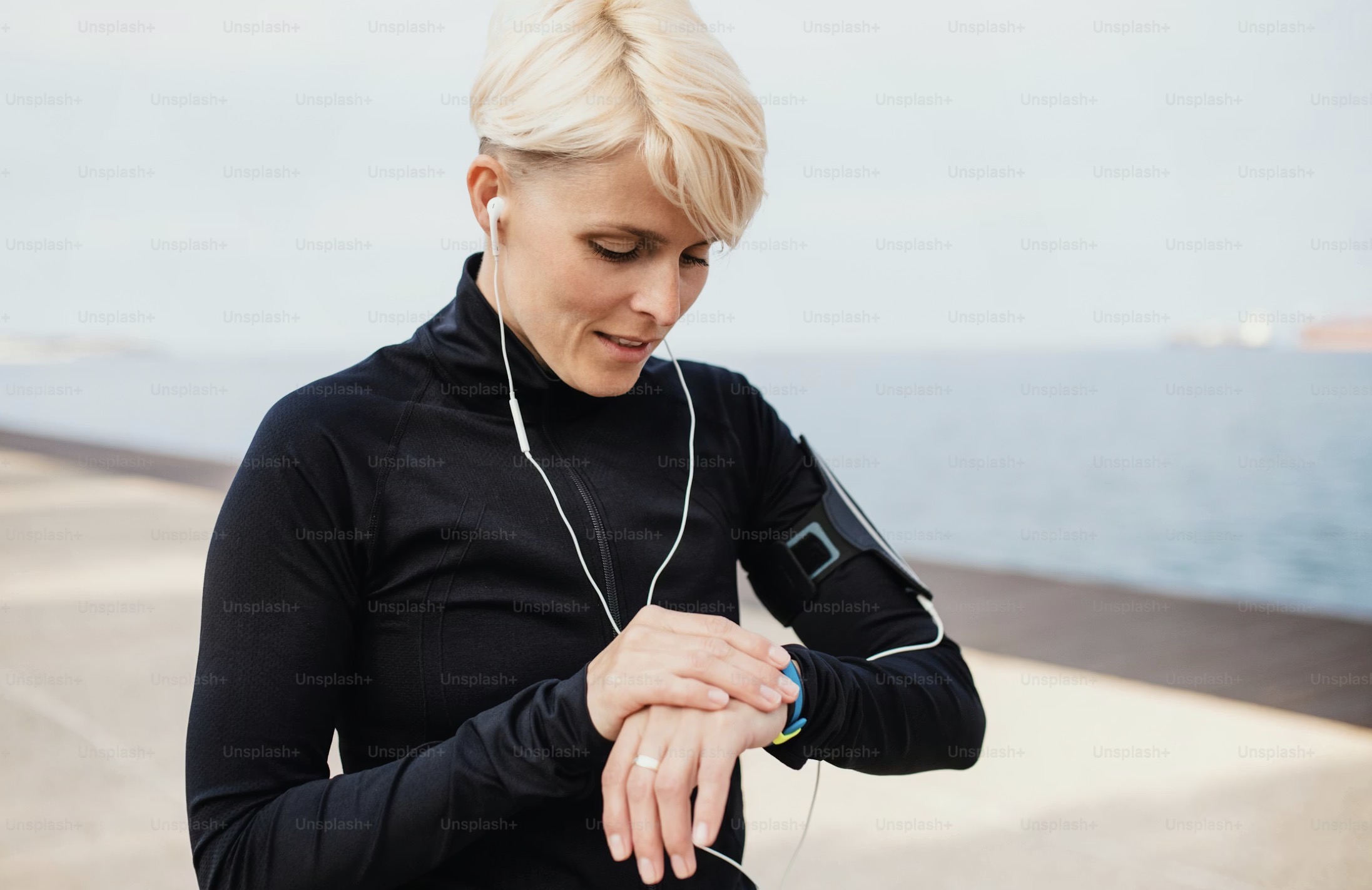
About 45%–65% of Americans now use health wearables such as smartwatches, fitness trackers, and wellness apps to monitor their health and daily habits, and that number continues to grow. But should consumers trust every AI-powered wellness brand on the market?
AI-powered wellness tools can encourage healthier habits, educate consumers, and support self-management. However, some can also trigger anxiety, false confidence, unhealthy obsession, or medical-sounding claims that go too far. Reuters has highlighted both: the growth of wearables and the rising scrutiny of products that blur the line between wellness and medical use. The quality of guidance provided by wellness apps and wearables, customization, along with data security and the cost of the device or a membership, are also among consumers’ main concerns.
Over the past few months, I have been exploring how responsible AI can better serve both consumers and wellness professionals. I gathered insights from wellness and healthcare events, doctors, dietitians, and medical research. I tested a variety of wellness apps to better understand the science, the marketing, and the media attention surrounding this space. In my article, “Responsible AI in Wellness: Trust in Wearables and Health Apps,” I explore the key questions outlined in the summary box below. I also supply my answers with life examples, case studies, and links to the apps, brands, and products we discuss. As an Amazon Associate I earn from qualifying purchases.
FAQ: Responsible AI in Wellness
What is responsible AI in wellness?
Responsible AI in wellness means using AI to support healthier habits, education, and self-awareness without crossing into diagnosis, exaggerated claims, or misleading medical advice.
Can wellness apps and wearables really help consumers?
Yes, many can help users track habits, improve routines, and notice patterns over time. The most useful tools support behavior change without making users overly dependent on data.
What are the risks of wellness apps and wearables?
Some tools can create anxiety, false confidence, data obsession, privacy concerns, or advice that sounds more medical than it really is. Reuters’ reporting on wearable regulation shows why this boundary matters.
Which app is better: Noom, MyFitnessPal, or WW?
It depends on the user. Noom is often stronger for psychology and behavior change, MyFitnessPal for logging and macros, and WW for structure, community, and weight-loss coaching.
Which wearable is better: Apple Watch, Oura, Fitbit, or WHOOP?
It depends on the goal. Apple Watch is broad and versatile, Oura is strong for sleep and recovery, Fitbit is approachable for general wellness, and WHOOP is more performance-and recovery-focused.
Why does the line between wellness and medical use matter?
Because products that sound diagnostic may influence health decisions more strongly than they should. The FDA’s 2026 guidance and Reuters’ reporting both show that this line affects regulation, trust, and safety.
What sources informed this article?
The article draws on insights that I gathered from wellness and healthcare events, commentary from registered dietitians and medical authors, functional medicine practitioners I interviewed, my research, and hands-on testing of apps and wearables.
How can wellness, healthcare, fitness, nutrition, and functional medicine professionals use responsible AI in their daily business practices?
You can find action steps and practical advice for wellness and healthcare professionals in my upcoming workshop: “Responsible AI in Wellness: Practical and Trustworthy Ways to Use AI in Client Care and Business Operations.”
Does the article compare different AI wellness brands?
Yes. It reviews and compares several AI-driven wellness apps, diets, and wearable brands to examine how they perform in practice.
Responsible AI in Wellness Starts With Clear Boundaries
Responsible AI in wellness should help people build healthier habits without drifting into diagnosis, exaggerated claims, or medical-sounding certainty. That boundary matters even more now that the FDA has said it will take a lighter-touch approach to many low-risk wellness tools while holding a firmer line when companies edge toward medical claims. Reuters reported in January 2026 that the agency wants fitness trackers and health apps to support healthy lifestyles, not replace clinical care. That is the right starting point for any wellness brand: AI can guide, nudge, and educate, but it should not pretend to be a doctor.
Nutrition advice shows why this is so important. Dr. Mark Hyman often argues that “food is medicine,” and on his site he frames food not just as calories but as biological information that shapes health. Cynthia Li, in her book Brave New Medicine that I reviewed, writes that food is not merely generic energy but “molecular information,” a phrase that captures why wellness technology should treat eating patterns with nuance rather than as a gamified score. Even Ori Hofmekler, known for the more rigid “Warrior Diet”, and “The Anti-Estrogenic Diet” emphasized variety, color, and stopping when thirst overtakes hunger.
These ideas can inspire better wellness program design, but they also need context. No single eating philosophy works for everyone, and responsible AI tools In wellness should reflect that complexity instead of forcing people into one-size-fits-all generic meal plans and other generic formulas.

Can AI Tools Truly Support Healthier Habits
The best AI wellness tools support consistency, reflection, and pattern recognition. Noom’s clearest strength is its psychology-based framing: it tries to help users understand behavior change, not just count calories. That gives it an advantage over simpler trackers. Compared with WW, which emphasizes coaching and workshops, Noom often feels more self-guided, behavioral and mindset-driven. Compared with MyFitnessPal, which is still strongest as a food and macro logging tool, or “LooseIt!” app, and medical weight-loss services like WW, Noom is less about pure data entry and more about behavior prompts. WW’s advantage is human support inside the app, while MyFitnessPal’s advantage is speed and logging tools like barcode scan, voice log, and meal scan. The weakness across all three is that they can still make users over-focus on numbers if the coaching and customization layers are weak or the user is already prone to anxiety around food.
Noom & Its Competitors: Pros and Cons
For a regular user, the most obvious benefit of Noom is that it is not just a calorie tracker. It combines daily behavior-change lessons, food/activity tracking, coaching/community features, and now medication support through Noom Med and its GLP-1 Companion, so the app tries to help users build habits rather than simply log data. Noom also positions itself around psychology, which is still one of its clearest brand differentiators, and its diabetes-prevention offering has earned CDC recognition.
The weakest points are fairly clear too. First, price and pricing clarity remain a vulnerability. Noom’s official pricing can look expensive but affordable on long plans, but the monthly equivalent depends on different matters. Reviews continuously show frustration around renewals, cancellations, and billing transparency. That creates trust friction, especially when cheaper or freer and multiple alternatives exist.
Second, Noom still appears weaker than some rivals on core tracking utility and the quality of customized advice. MyFitnessPal for instance, emphasizes its huge food database, and Lose It! is known primarily for fast, straightforward logging. WW is great for coaching support and community. By contrast, reviews on Noom mention buggy tracking, weaker food logging, weak service customization, generic fitness and food recipes advice, and less human touch. That matters because if logging feels clunky, advice oversimplified, pricing and security policies are unclear – users churn even if they truly like the concept.

AI-Powered Wearables
Wearables also show both the promise and the practical differences in responsible AI. Apple Watch is broad and accessible: it offers heart-rate alerts, sleep data, ECG on supported models, and a growing set of health notifications. The model: Apple Watch Series 11 [GPS 46mm] is one of my favorites. Oura’s strength is different. It is quieter, more recovery-oriented, and more focused on sleep, stress, and readiness rather than constant screen interaction. Fitbit Smart Watch, Fitbit Tracker and Garmin sit somewhere between lifestyle and fitness utility, often appealing to users who want exercise metrics without wearing a mini phone all day. In practical terms, Apple Watch is strongest for active, real-time feedback. Garmin tends to serve training-focused users; and Fitbit remains approachable for mainstream tracking. Responsible use means matching the device to the person, not assuming that more data always means better health.
WHOOP Band is another useful example. It has built a strong brand around recovery, strain, and performance, and many users like its focused coaching model. The device is popular with athletes and fitness-focused users. Customer review summary for the newer WHOOP MG says users appreciate the health metrics, insights, comfort, accuracy, and battery life. But Oura Ring is a serious competitor too because it packages recovery and sleep insight in a more discreet form factor, while Apple keeps closing the gap by layering more health features into a mainstream device. WHOOP’s challenge, as Reuters noted, is that once a company adds features that look more like medical functions, -the regulators and consumers both start asking harder questions.
When Wellness Technology Creates More Harm Than Help
The biggest problem with wellness AI is not that it exists. It is that some products create false confidence, anxiety, data obsession, or medical confusion. A recovery score can be helpful, but it can also make people ignore how they actually feel. Food logging can build awareness, but it can also intensify perfectionism or disordered thinking. “Healthy eating” advice can become misleading when apps flatten complex issues such as hormones, GI problems, menopause, GLP-1 weight loss protocol and medication side effects, or surgery recovery into a generic daily score.
This is where critique matters. Noom can be more thoughtful than a basic tracker, but it still lives in the behavior-change industry and can oversimplify people’s biological realities. MyFitnessPal is efficient, but for some users it is too focused on logging and not enough on meaning. WW’s coaching model can be supportive, yet it may still keep users inside a weight-centered framework that does not fit every person’s goals.
Apple Watch offers powerful alerts, but users can misread them without clinical context. Oura and WHOOP can promote better sleep and recovery awareness, but some users may start outsourcing too much self-trust to a readiness score. Responsible AI should never punish human judgment or replace professional care with dashboards.

The Real Future of Wellness AI Is Trustworthy, Human, & Practical
The future of wellness AI should be calmer, clearer, and more honest. Products should explain uncertainty, flag when professional input is needed. They should avoid dramatic health claims, and recognize that people come with different histories, risks, and emotional relationships to food and data.
For instance, hear the practical point from Kayley George, RDN, where she warns about side-effects of weight loss GLP-1 drugs. Because they already slow digestion, piling on fiber supplements too quickly can worsen bloating, nausea, and constipation. In practice, that means starting with real food first: Greek yogurt, fish, lentils, berries, oats, and plenty of fluids. Small meals, slower eating, and strength training are also important. Emerging reporting suggests semaglutide users may lose lean muscle along with fat if protein intake is too low. Therefore, some generic diet advice from majority of apps or nutritionists could be useless.
Good AI should help users notice patterns, build routines, and ask better questions. It should not frighten them into constant monitoring or persuade them that software has replaced care. WHO’s broader guidance on AI in health specified that trustworthy systems need governance, transparency, and human oversight, not just clever features.

Quick Introduction of My Book Review: Brave New Medicine
I recently wrote a book review on Dr. Li’s MD book: ‘Brave New Medicine- A Doctor’s Unconventional Path to Healing Her Autoimmune Illness”. There are some lessons learned that I wanted to share. First, self-care and self-reliance in health education are just as important as visiting the healthcare professionals you choose to trust. Understanding your own condition, asking better questions, and becoming an active participant in your care can make a huge difference.
Second, discipline in healing and wellness matters. Without consistency and daily attention to your well-being, significant results are unlikely to appear. Wellness apps development teams and doctors, each with different areas of expertise, are encouraging patients to take a smarter, more informed, and more consistent role in their own health.
My Upcoming Workshop for Wellness & Healthcare Professionals
Join my upcoming workshop titled “Responsible AI in Wellness: Practical and Safe Ways to Use AI in Client Care and Daily Business Operations.” We will take one step further in discussing the topic. You will look at real case studies in wellness and digital healthcare fields. Wellness, functional medical doctors, dietitians, and nutrition coaches will use my prompts in their daily business operations and client relations. The workshop includes practical exersise, Q&A sessions, and much more. The goal is to give you action steps for client education, content review, safe AI use, follow-up communication, and more responsible service design. The workshop is in the works. Return to my website soon for new announcements.
For everyone else, the main takeaway is simple. AI can strengthen everyday wellness support, but only when it respects boundaries, acknowledges uncertainty, and keeps human care at the center. For more collaboration and if you have any questions please reach out to me via contact page. Let me take marketing off your plate!
Use free advice and information on AI in Healthcare and Wellness I shared in my articles:
‘How Wellness and Healthcare Brands Can Win AI search via AEO and SEO’ .
Or
‘Empathy by Design – How AI is Humanizing Healthcare’.
Research and articles from the mainstream media:
- Reuters: US FDA to limit regulation of health and fitness wearables, commissioner says
- Reuters: FDA scrutiny of WHOOP signals challenges for niche wearable device makers
- Reuters: US Health Secretary Kennedy says HHS to launch campaign to encourage wearable devices
- General Wellness – Policy for Low-Risk Devises
- Business Insider on Midi Health’s use of AI in women’s midlife care.
- Kayley George RD- Founder, Dietitian, Book Writer
- ”Brave New Medicine”, Book by Dr. Cynthia Li, MD.
- “Everything Guide to GLP -1 users” Book By Kayley George, RD
Leave a Reply